

This guide is not built yet.
We publish a place only when we can cover it properly, with every figure sourced and dated. Yucatán is on the list, and this page is a placeholder until then.
Tell us below what you would want it to answer. What readers ask for decides the order we build in.
Want Yucatán built next?
Tell us what you would want this guide to answer. What readers ask for decides what we build, and we will email you when it is live.
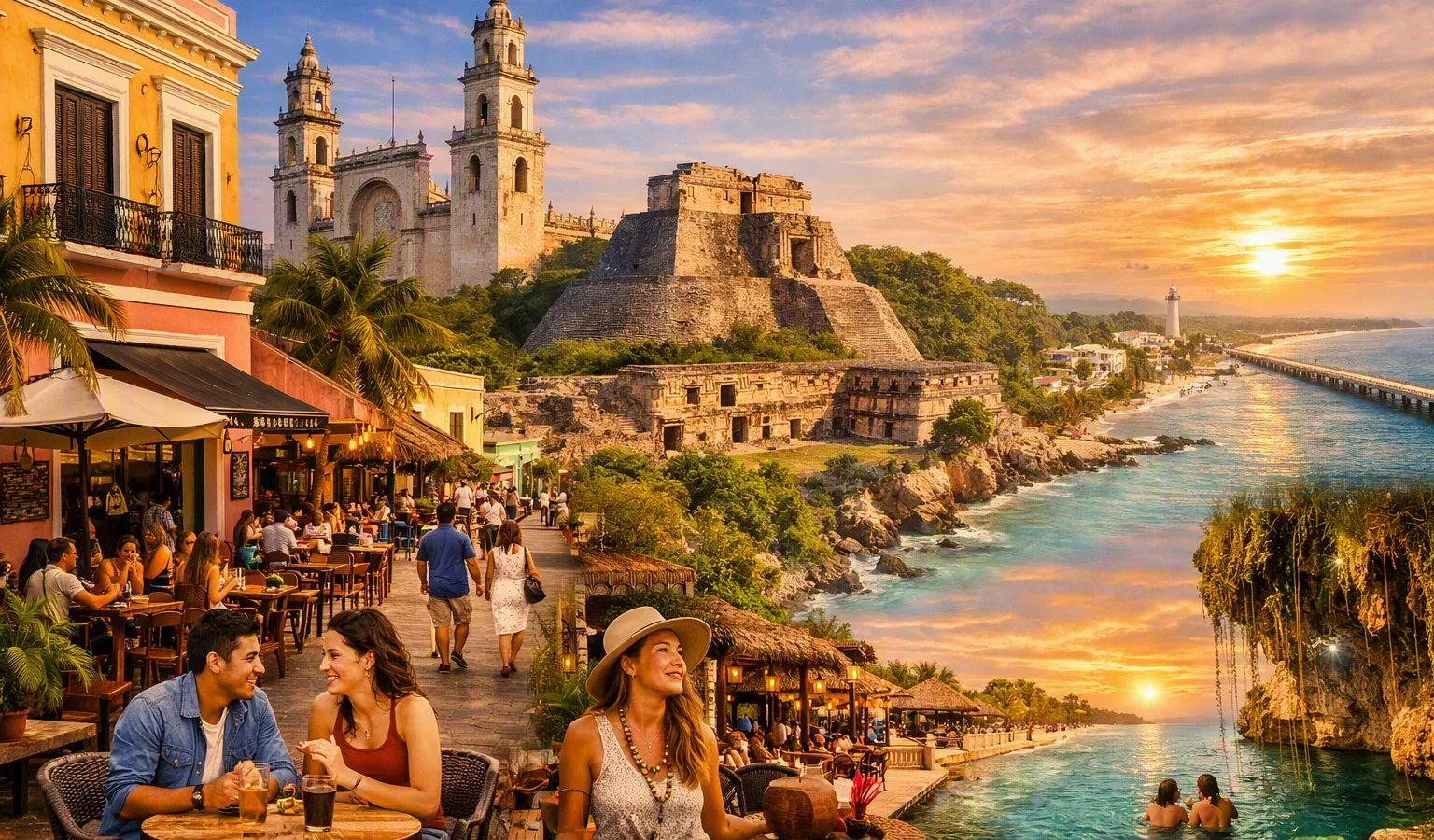
Yucatán is one of only two Mexican states rated Level 1 by the US State Department, and that single fact explains much of why Mérida has become the destination of choice for people whose first question is safety. It is also the heartland of Maya civilisation, with a culture and cuisine noticeably distinct from central Mexico.
Key facts
| Capital | Mérida |
| Travel advisory | Level 1, normal precautions, one of only two states |
| Time zone | Central, UTC-6, no daylight saving; an hour behind neighboring Quintana Roo |
| Known for | Maya archaeology, cenotes, Yucatecan cuisine, colonial Mérida |
| Language | Spanish, with Yucatec Maya still widely spoken |
| Checked | August 2026 |
A distinct culture
The Yucatán peninsula was geographically isolated from central Mexico for most of its history and developed accordingly. Yucatec Maya is still spoken by a substantial population, the cuisine is its own tradition of cochinita pibil, sopa de lima and habanero rather than the chilli-and-mole palette of central Mexico, and the regional identity is strongly felt.
Cenotes and water
The peninsula has almost no surface rivers. Rainwater drains through porous limestone into an underground network, surfacing as cenotes, which the Maya treated as sacred and which now define the region landscape and tourism. It also means water supply and quality behave differently here than elsewhere in Mexico, which matters for anyone buying property.

